
Donor Operating System
What is a donor operating system?
A donor operating system keeps donor records, relationship memory, permissions, workflow history, and AI action control in one governed environment so donor work can move without scattering context.
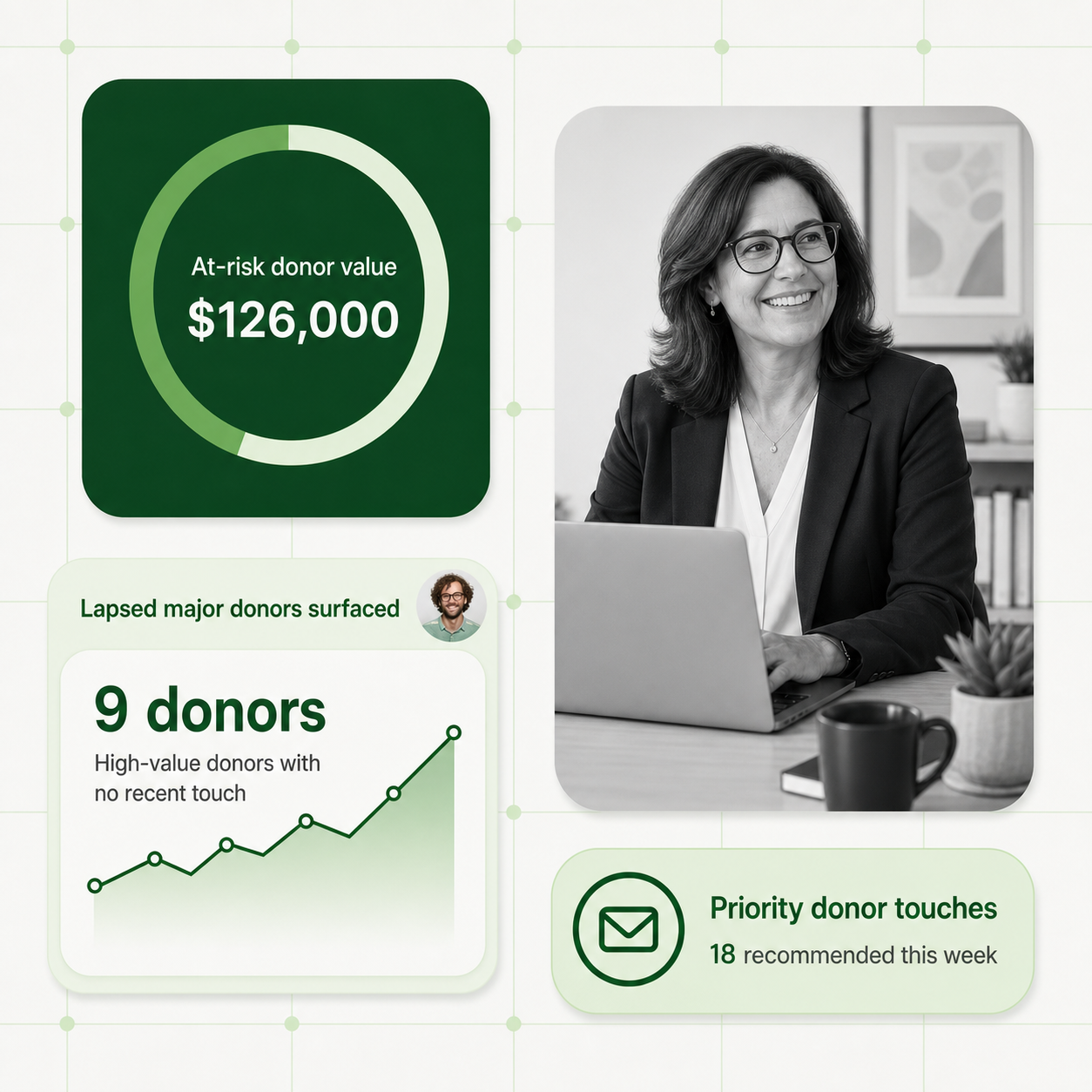
The operating system is where donor work lives.
HeartBeat holds the context. Pulse Packs add the capability. Pulse Companion moves the work.
Why donor data gets scattered
Nonprofit teams often have the information they need, but it lives across CRMs, giving platforms, spreadsheets, meeting notes, inbox follow-ups, and staff memory. The problem is not only storage. The problem is that donor data does not naturally become donor action.
What governed donor work looks like
A useful donor operating system gives the team shared context for who needs attention, what happened last, what changed, what is overdue, what should happen next, and what leadership needs to know.
Why a lightweight CRM is not always enough
A lightweight CRM may store donor profiles, gifts, activities, and email history, but the real donor operation often still lives in spreadsheets, reports, notes, and staff memory. DonorOps can replace that fragmented stack with HeartBeat, Pulse Packs, and Pulse Companion.
See the CRM comparisonHow AI can help prepare donor work
Pulse Companion can summarize donor context, prepare one-page donor briefs, organize messy notes, surface overdue follow-ups, and draft stewardship language for review. The goal is to make prep work easier to review and act on under your rules.
The simplest way to say it
Donor operations improve when context, permissions, workflows, and AI-assisted actions live in one governed operating core.
A donor operating system turns governed donor context into coordinated donor action.