
Security
Your donor data stays protected while AI helps you act on it.
DonorOps gives your team an AI-assisted view of donor relationships without giving AI unlimited access. Every connection is governed by permission controls, approval steps, and clear action boundaries.
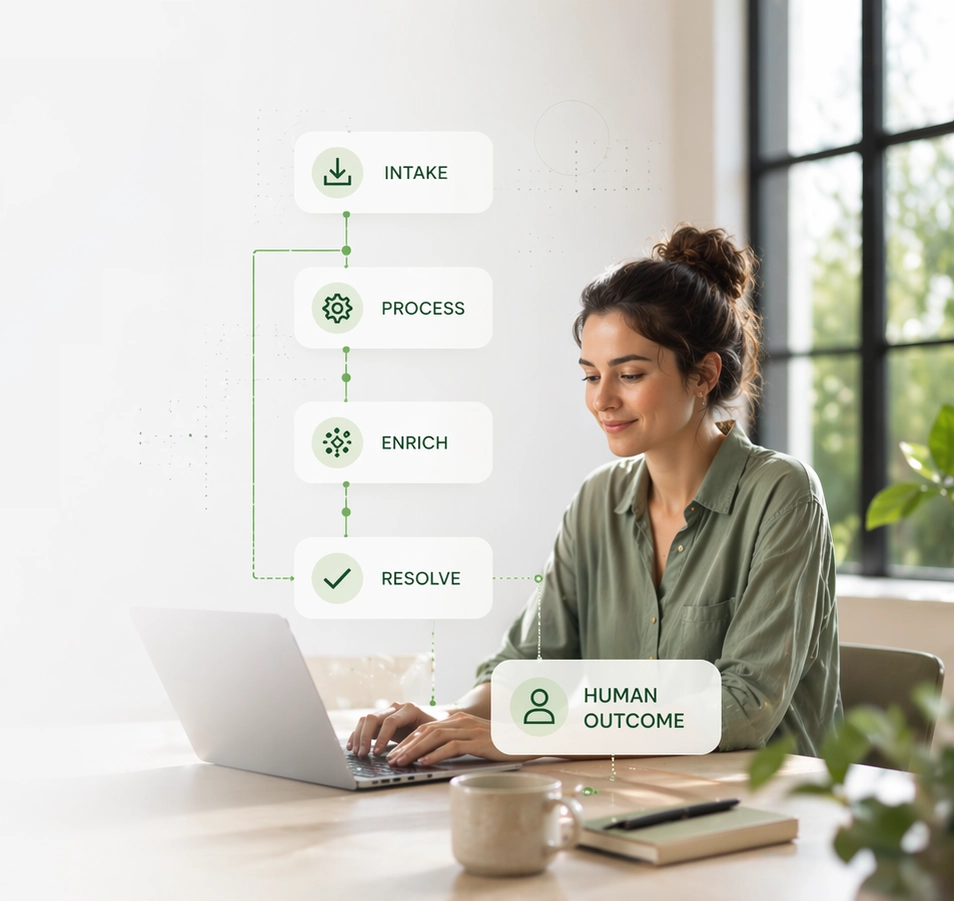
AI helps only inside permissioned paths.
Read-only questions, approved changes, and reviewable donor actions stay inside your nonprofit's governed security boundary.
Core Security Promises
AI access should be governed, not assumed.
DonorOps places a permission-controlled security layer between AI assistance and your donor records.
Permission-bound access
AI can only access approved donor data and approved actions. Access is scoped by role, operation, and intended use.
Human approval for changes
Read-only questions can be allowed safely, while create and update actions are held for confirmation before records change.
Deletes are blocked
Destructive actions are not allowed by default. Risky requests become review items instead of automatic changes.
Auditable activity
Important AI-assisted activity is traceable, so teams can understand what happened, who reviewed it, and why it moved forward.
Protected AI Access
A secure path between donor data and AI help.
DonorOps does not simply connect an AI assistant to your database. It creates a governed path where access is scoped by role, operation, and approved use case, so data stays controlled by your organization.
Donor data
Secure permission layer
Approved AI access
Human-reviewed action
Nonprofit Sensitivity
Donor relationships are sensitive.
DonorOps treats AI access as something that must be governed, not assumed. The platform is designed for the notes, history, context, and accountability that nonprofit teams need to handle carefully.
Donor notes
Giving history
Relationship status
Stewardship activity
Board visibility
Staff accountability
Action Boundaries
What our secure AI can help with.
AI can help with
AI cannot do by default
Find donors needing follow-up
Delete donor records
Summarize giving history
Access unapproved data
Draft stewardship notes
Send messages without review
Prepare board visibility
Change records without approval
Security Answers
Clear answers for safe donor AI.
These are the first questions nonprofit leaders, MGOs, and operators should ask before bringing donor data anywhere near AI-assisted workflows.
Nonprofits should not casually paste donor records, giving history, private notes, or sensitive relationship context into general AI tools. DonorOps is designed around controlled access, permission boundaries, auditability, and human review so AI can assist without turning donor trust into a prompt-box risk.
DonorOps treats AI access as permissioned work. Data access should be scoped by role, source, operation, and intended use. Read-only questions can be allowed safely while create, update, export, or donor-facing actions require confirmation and review.
Secure AI can prepare donor meeting briefs, summarize giving and relationship context, surface overdue follow-ups, organize messy notes, and draft stewardship language for review. It should prepare the work, not replace the relationship.
AI should not send donor communications without review, make unsupervised ask decisions, invent donor facts, expose sensitive context to unsecured tools, or override relationship owners. High-trust donor work needs clear action boundaries.
No. DonorOps keeps people in charge. Risky actions become review items, changes wait for approval, and final donor communication remains a human judgment call.
Donor reporting should use the minimum necessary donor context, produce reviewable summaries, and keep sensitive detail inside permissioned systems. The goal is board-ready visibility without uploading raw donor files into unsecured AI tools.
AI assistance without surrendering control.
DonorOps keeps people in charge, limits what AI can access, and turns risky actions into reviewable decisions. Your data stays controlled by your organization while your team gets more capacity for donor care.